Formats
Open seating vs assigned seating at a wedding
Open seating saves you an evening of planning. Assigned tables save your guests a scramble. Here is how to choose, and what assigning actually takes.
Updated
Open seating means guests sit wherever they like. Assigned seating means you decide, at least which table. Couples often lean toward open seating because the chart sounds like hard work, then worry about aunts standing in the middle of the room holding a plate. Both worries are fair, and the right answer depends on a few things about your wedding.
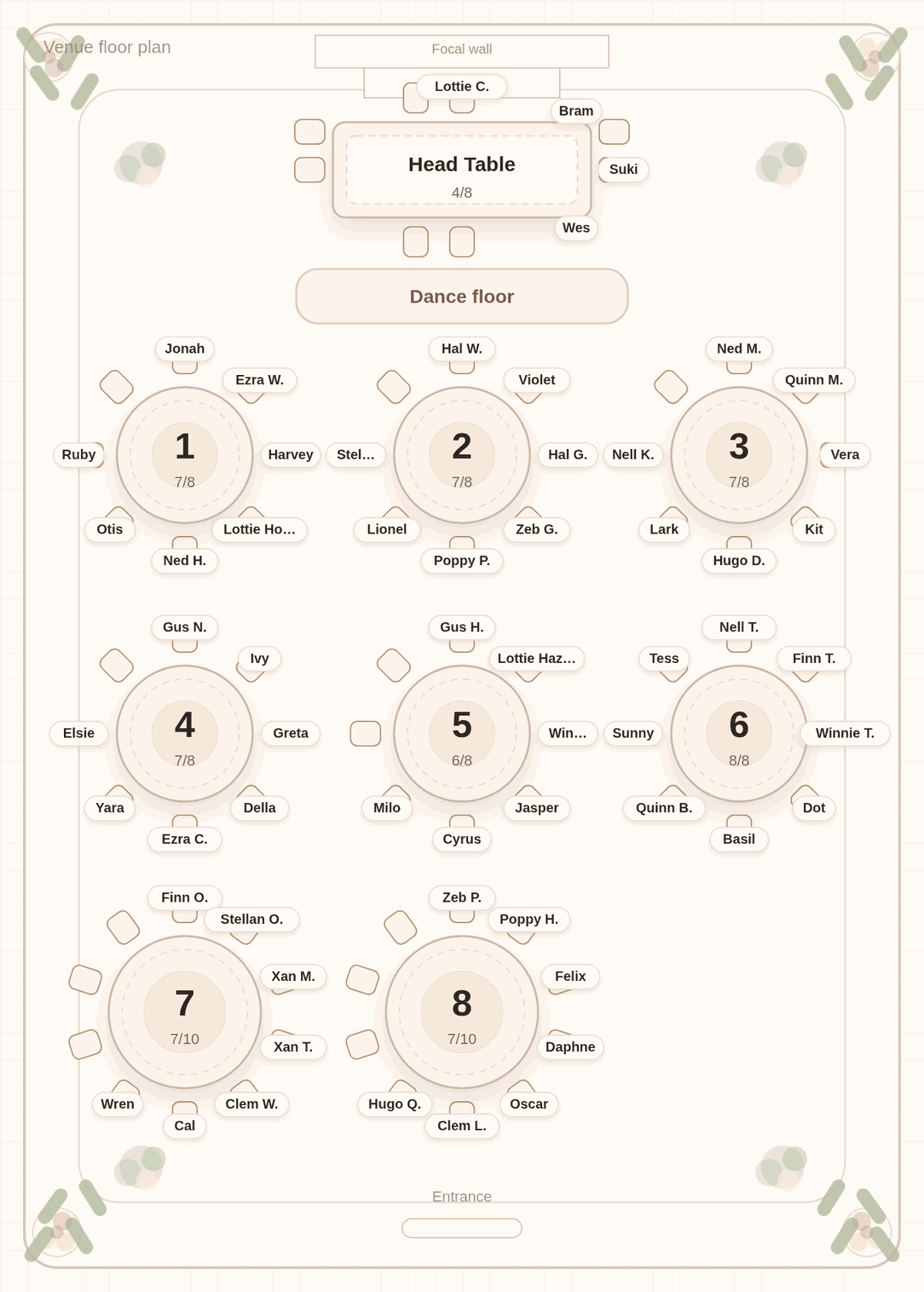
The chart below shows what assigning costs when the list is ready. We pasted a made-up list of 60 guests into Tablecharm, tagged the couple and two attendants for the head table, accepted the suggested room of six rounds of eight and two rounds of ten, and pressed Solve. The solve itself took under two seconds, measured in this capture from the button press to a seated chart.
When open seating works
Open seating is a good fit when most of these are true:
- The wedding is small, roughly under 50 guests, and most people know each other.
- The meal is a buffet, food stations or cocktail style, not a plated dinner.
- There are more seats than guests, so nobody hunts for the last chair.
- The two families already know each other, or will happily mix.
Many couples with open seating still reserve a few tables for family and the wedding party, with a small "Reserved" card on each. That keeps the honor tables safe and leaves the rest free.
When it causes a scramble
Open seating goes wrong in predictable ways. Couples arrive and cannot find two seats together. Groups save whole tables with jackets, and the last guests in stand holding their plates. Older guests end up at the back because they walked in slowly. Guests who know nobody hover.
The larger the wedding, the more of this happens, and a plated dinner makes it worse because the caterer needs to know who sits where. At that point assigning tables is kinder to everyone.
Assigned tables, not assigned chairs
Assigning does not have to mean place cards at every chair. The common middle path is assigned tables: every guest has a table, and chooses any chair at it. You control who sits together, which is where feelings get hurt or spared. Guests still choose their neighbor.
Tablecharm works this way. It assigns tables, not chairs. The assigned tables vs assigned seats guide explains when you might go further.
What assigning really costs
The fear with assigned seating is the time. Most of that time is not the chart. It is getting the list into shape: one line per household, a tag for each friend group, and the few people who should sit apart. You need most of that for invitations anyway.
Once the list exists, the seating is fast. Our 60 guests were seated in under two seconds after pressing Solve, with every household kept together and the 12 open seats spread across the rounds. What remains is a few minutes of reading the chart as a guest would and dragging anyone who should move. The how long guide breaks the time down.
A middle path for small weddings
If you are torn, assign only what matters. Reserve the head table and the family tables, and let everyone else sit freely. Or assign tables for the families and leave two or three open tables for friends. Either way, guests with special needs, like a grandparent who should be near the door, get a good seat without anyone scrambling.
Questions couples ask
Is open seating OK at a wedding?
Yes, especially at small, casual weddings with a buffet and spare seats. Reserve tables for family and the wedding party so they are not left standing.
How many guests is too many for open seating?
There is no fixed number, but it gets harder past about 50 guests, and with a plated dinner. The more guests, the more likely someone ends up without a seat near their people.
Do I need place cards if I assign tables?
No. Guests need a way to find their table, such as a sign, an escort list or escort cards. Place cards are for assigned chairs.
How long does assigning tables take?
Most of the time goes into the list. With the list ready, Tablecharm seated 60 guests in under two seconds in this guide's capture; checking and adjusting takes a few minutes more.
See what assigning takes
Paste your list below and solve. If the result looks right, you can unlock the full chart; if not, you have lost a minute.
No list handy? Try it with a sample list first. The editor and solver are free, with every table readable in preview. Payment is for final files and the guest link.

Useful next
- When to make your seating chart: if you decide to assign
- Escort cards vs place cards: tables or chairs
- Seating chart maker: how the solve works