Seating problems
Should you have a singles table at a wedding?
A table labeled by relationship status is a table guests notice. Seat single guests with the people they know, and they will have a better night.
Updated
The singles table has a reputation, and not a good one. The idea is kind: put all the unattached guests together and maybe sparks fly. The result is often a table of strangers who were grouped for one reason everyone can see. Some of them will enjoy it. Some will feel sorted.
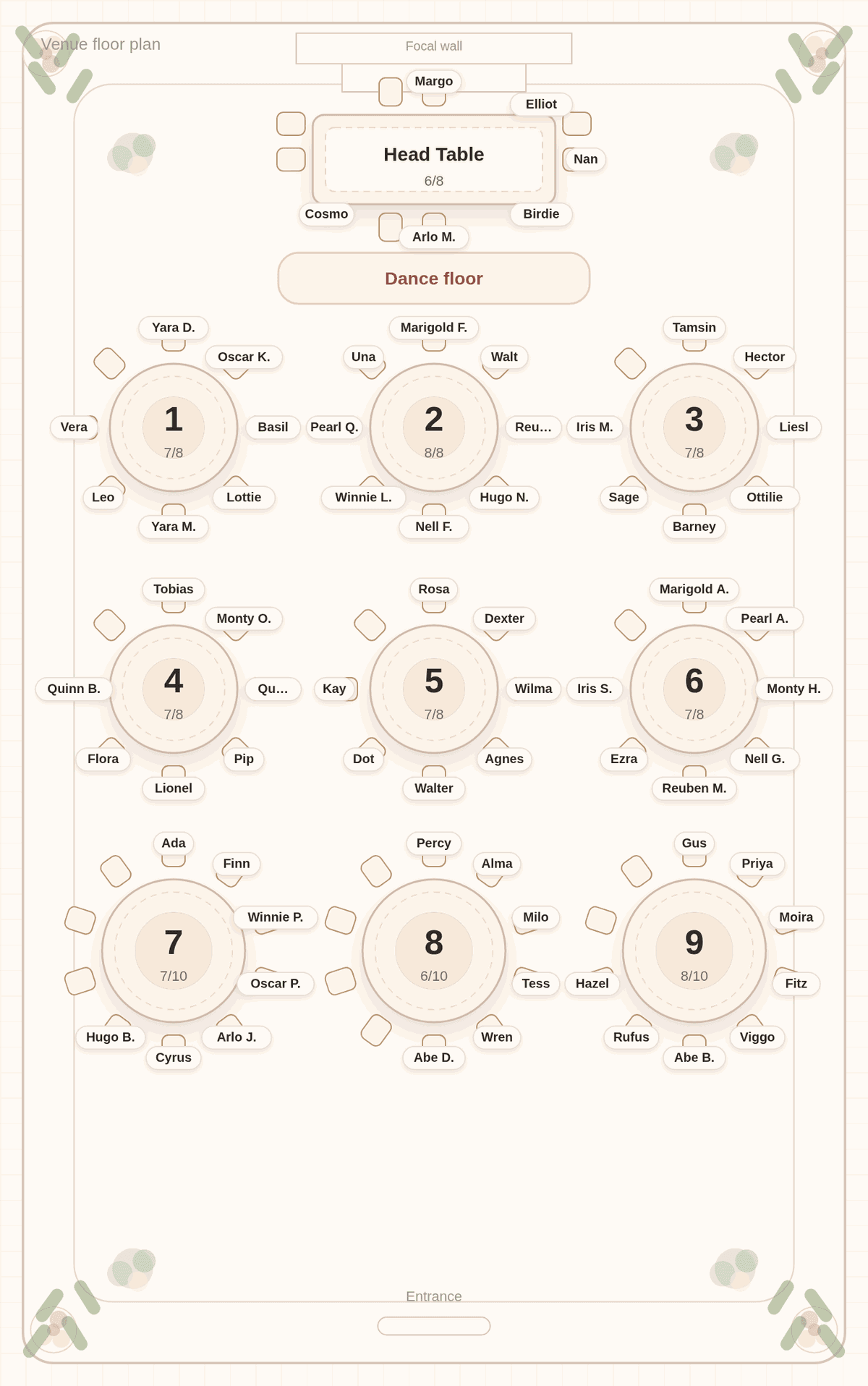
There is an easy alternative, shown in the chart below. We pasted a made-up list of 70 guests into Tablecharm with eight single guests from three circles: three college friends, two coworkers and three cousins. We tagged each circle along with the couples in it ("college", "work", "cousins") and solved. Each group of singles landed with the couples they know: the college friends at Table 3, the coworkers at Table 9 and the cousins at Table 5.
Why the singles table backfires
A table is a group guests can read at a glance on the seating poster. When the thing its guests share is "not in a couple", people notice, and some take it personally. It also tends to put strangers together, because single guests often come from different parts of your life.
There is a practical problem too. A single guest usually knows a few couples on the list much better than they know the other singles. Taking them away from those people to sit with strangers trades a sure good evening for a hopeful one.
Seat by circle, not by status
The fix is to seat single guests the same way you seat everyone else: with the people they know. Think in circles, like college, work, cousins or the running club, and put each single guest at the table of their circle, couples included.
In Tablecharm that means one tag per circle. Tag the singles and the couples from the same circle alike, and the solver leans toward seating them together. That is what the chart above shows. None of the eight singles is at a table of strangers, and none of the tables is a "singles" table.
When a mixed table of singles works
There are weddings where a table of single friends is exactly right: a close friend group that happens to be single, who will be the life of the room together. That is still seating by circle. The difference from the traditional singles table is that they already know each other.
If you want to give two single guests a chance to meet, seat them at the same table as part of two friendly groups rather than at a table of their own. It is less obvious and much more comfortable.
Check for anyone left alone
Single guests are the most likely to end up at a table where they know nobody, simply because they arrive alone. After you solve, Tablecharm lists anyone who knows nobody at their table, judging from shared households, shared tags and neighboring lines in your list. If it names someone, tag them with the circle they belong to, or press "Fix it" to run a solve that tries harder, moving as few other guests as it can.
The guide on guests who don't know anyone has more on the special case of guests with no circle at all.
Should you give single guests a plus-one?
That is a budget and etiquette question more than a seating one. If you do, a plus-one solves the seating question on its own, because the two of them sit together. In Tablecharm a line like "Gus Honeysett +1" creates two guests in one household. The plus-ones guide covers the details, including naming the plus-one before printing.
Questions couples ask
Is a singles table rude?
Not rude, but risky. Grouping guests by relationship status is visible to everyone and often puts strangers together. Seating singles with their own friends is usually kinder.
Where should single guests sit at a wedding?
With the people they know best, couples included: their college friends, their coworkers, their cousins. Tag each circle so the solver seats them together.
Can I seat two single guests together to set them up?
You can, gently. Seat them at the same table as part of two friendly groups, rather than at a table labeled for singles.
What about single guests who know nobody else on the list?
Look for any thread they share with other guests, such as the same job, the same town or the same hobby, and tag it. Then seat them at a warm table with a friendly couple, not at a table of other guests who also came alone.
Seat everyone by circle
Paste your list below, then tag each friend circle in the editor. Single guests land with the people they know, not at a table of strangers.
No list handy? Try it with a sample list first. The editor and solver are free, with every table readable in preview. Payment is for final files and the guest link.

Useful next
- Kids table seating: the one table grouped on purpose
- How the generator works: tags and rules
- Family drama seating chart: when circles clash