Seating problems
Where to seat wedding guests who don't know anyone
Every list has a few people who know only you. Give each of them a thread to pull, and check the chart for anyone left alone.
Updated
Every guest list has them: the coworker you invited because you sit next to each other, your one friend from a summer job, a cousin's new partner. They know you, and nobody else. Seat them badly and they spend dinner at a table of strangers who all grew up together. Seat them well and they may end the night with a new friend.
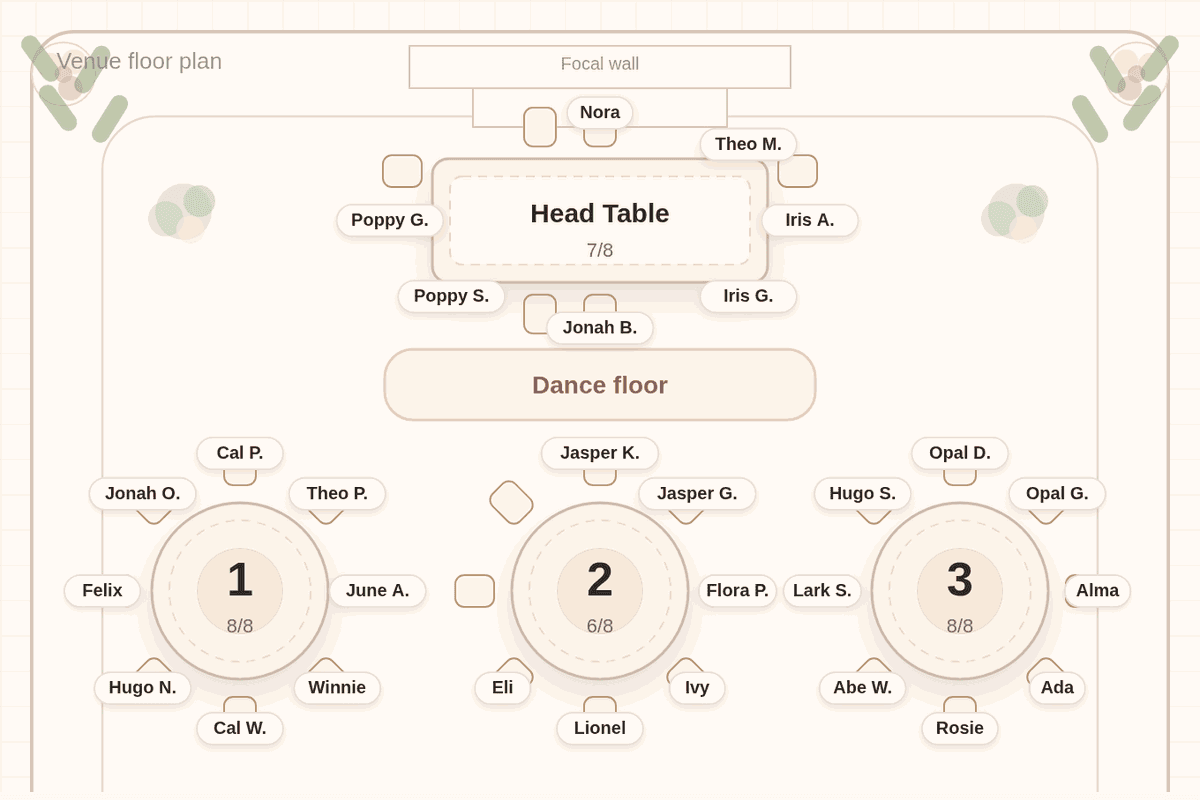
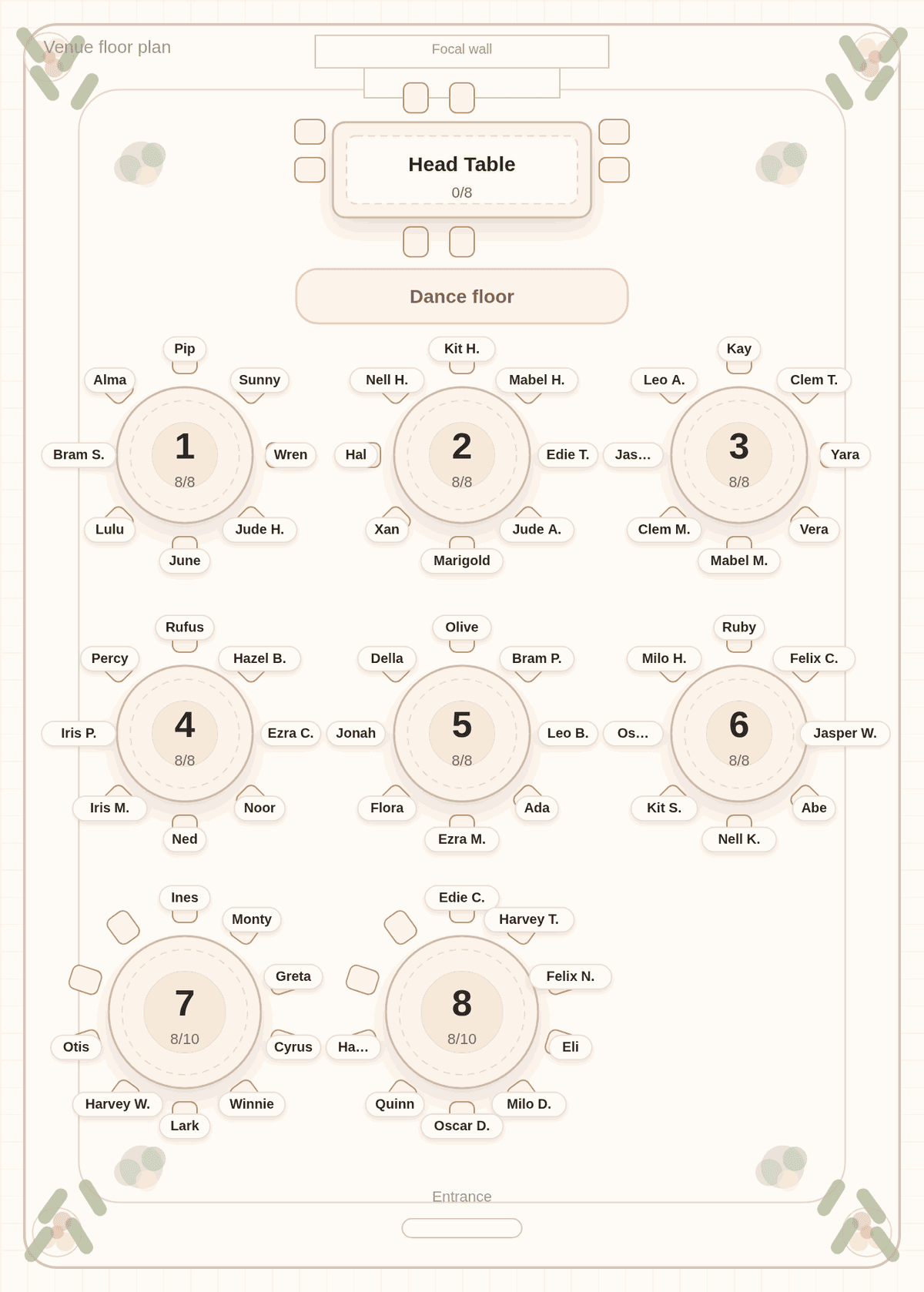
The chart below is a real one. We pasted a made-up list of 64 guests into Tablecharm, including four college friends and two coworkers who know nobody else on the list. We tagged the college friends "college" and the coworkers "work", then solved. The four college friends landed together at Table 7 and the two coworkers together at Table 8.
Find them before you seat anyone
Go down your list once with a single question: who here knows only us? The usual answers:
- Coworkers from a team where nobody else is invited.
- A friend from one chapter of your life, like a summer job, a semester abroad or a running club.
- New partners of friends or cousins.
- A guest traveling alone from far away.
Write them down. It is usually a short list, and knowing it exists is most of the fix. The mistake is not seating these guests badly on purpose; it is forgetting they are a special case until the chart is done.
Give each of them a thread
A guest who knows nobody needs one person at the table they can start a conversation with. That thread can be small. Two coworkers from different departments still share a building. Two people from your college years share a campus, even if they never met.
So group by what they share with each other, not by what they share with you. In Tablecharm that is a tag: mark the college friends "college" and the coworkers "work", and the solver treats a shared tag as a reason to seat people together. That is exactly what happened in the chart above.
Seat them next to a warm table, not a misc table
It is tempting to collect every leftover guest at one table at the back. Resist it. A table of people who each know nobody is a table where nobody knows anybody, and guests can tell when they have been put at the table for everyone else.
A better home is a table of friendly, talkative guests who are easy to join: a friend group that welcomes newcomers, or a couple you know will make introductions. Two or three near-strangers at a table of warm people work far better than eight strangers at a table of their own.
Check the finished chart for anyone alone
After a solve, Tablecharm lists guests who know nobody at their table. It judges "knows" only from what your list says: the same household, a shared tag, or a neighboring line in your paste. The first solve already leans toward seating people with someone they know. If the check still names people, "Fix it" runs one re-solve that tries harder to give each of them a familiar face, moving as few other guests as it can.
The check cannot read minds. If two guests are old friends but sit on different lines of your list with no shared tag, it cannot know. That is why the tags matter, and why a last read of the chart by a person is still worth ten minutes.
Small touches that help on the night
Seating does most of the work, and a couple of small habits do the rest. Introduce the guest to one tablemate in person during cocktails if you can. Ask a friend at that table to look after them. If the guest is bringing a plus-one, the question mostly goes away: seat the two of them together, which the app does automatically for anyone pasted with "+1" or "and Guest".
Questions couples ask
Should I put all the guests who don't know anyone at one table?
Usually not. A table made only of strangers stays quiet. Group them by what they share with each other, and seat small groups of them with welcoming friends rather than on their own.
Is it rude to seat a guest with people they don't know?
No. Mixing is normal and often the fun of a wedding. What matters is that everyone has at least one person they can start with.
How does Tablecharm know who knows whom?
Only from your list: people pasted on the same line, people with a shared tag, and people on neighboring lines. It cannot guess friendships you have not written down, so tag the groups that matter.
Check your own list for lone guests
Paste your guests below. After the solve, the app names anyone who knows nobody at their table, and one click tries to fix it.
No list handy? Try it with a sample list first. The editor and solver are free, with every table readable in preview. Payment is for final files and the guest link.

Useful next
- Family drama seating chart: the opposite problem: people who know each other too well
- How the generator works: rules, tags and what happens when they conflict
- Kids table seating: another group that needs its own plan